
Cabinetry guide
Cabinet Refinishing vs. Refacing vs. Replacing: Which Is Best for Your Kitchen?
Three very different paths can give a tired kitchen a new look. The right one depends on what is underneath the finish—not just what you see from across the room.
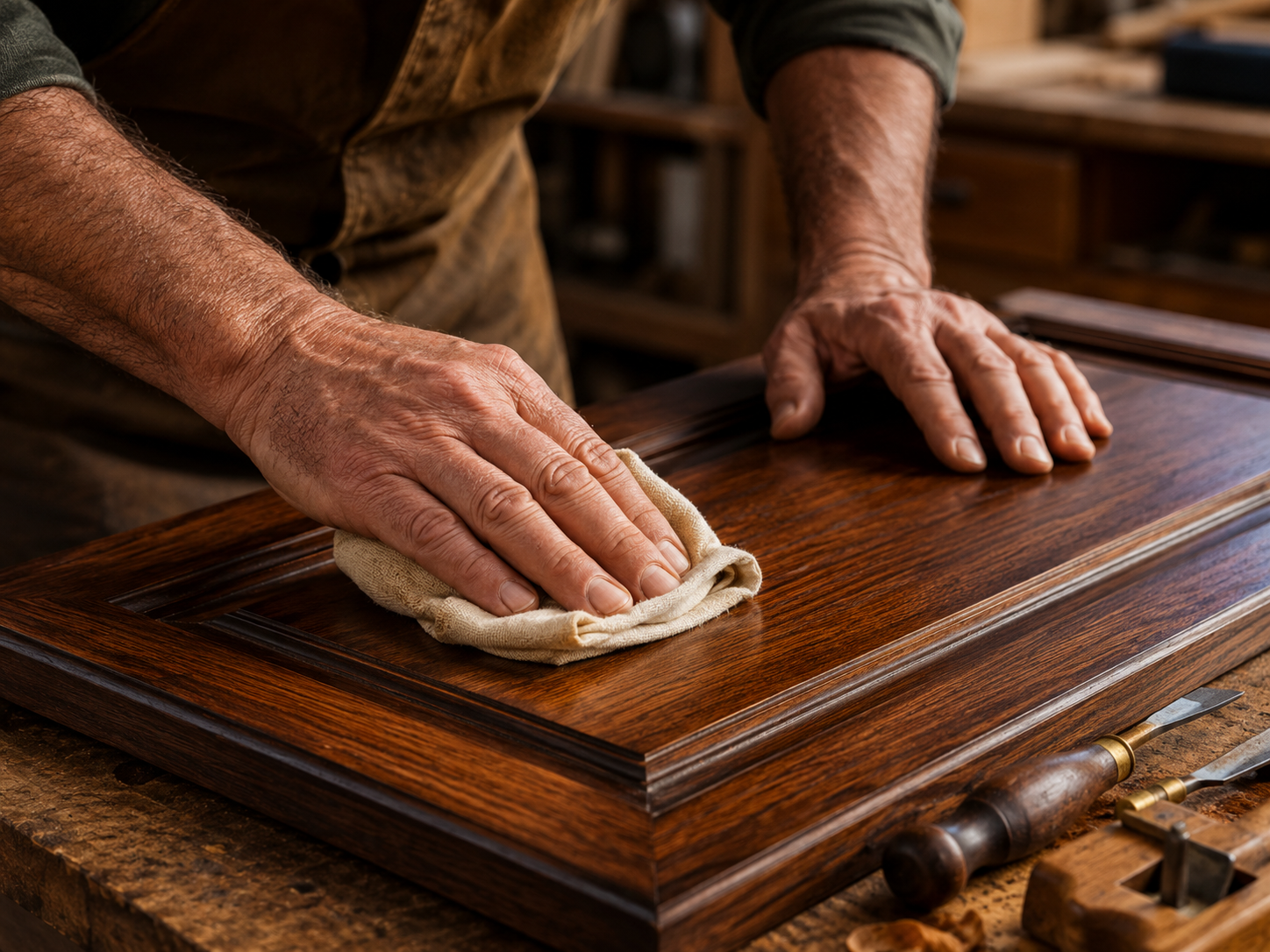
A kitchen can feel outdated even when its cabinets are still well made. The color may be too dark, the doors may look worn, or the style may no longer fit the rest of the home. That does not automatically mean everything needs to be torn out.
Homeowners generally have three professional options: refinishing, refacing, or replacing. People sometimes use those terms interchangeably, but they involve different materials, labor, costs, and results. Choosing well starts with an honest assessment of cabinet condition, layout, and what you actually want to change.
The decision matters. The National Association of Home Builders reported that kitchen remodels were among the most common remodeling projects, cited by 61% of remodelers in its 2024 survey. Meanwhile, Harvard’s Joint Center for Housing Studies projected American spending on improvements and repairs to owner-occupied homes would reach $509 billion in 2025. In a market that large, it is especially important to avoid paying for work your kitchen does not need.
What cabinet refinishing means
Refinishing preserves the existing cabinet boxes, doors, and drawer fronts. The visible surfaces are cleaned, repaired where appropriate, prepared, and coated with a new finishing system. Depending on the wood and the desired result, that might mean a new stain and protective clear finish or a properly prepared painted finish.
The key word is preserves. Refinishing does not cover failing construction or make a poor layout better. It works best when the cabinetry is structurally sound and the homeowner likes the door style and kitchen configuration. Quality hardwood doors, plywood boxes, sound face frames, and repairable joints may offer an excellent foundation for a new appearance.
Preparation is what separates durable professional work from a quick cosmetic coating. Kitchen cabinets collect grease, cooking residue, hand oils, polishes, and cleaning products. Those contaminants can interfere with adhesion. A responsible process considers the existing coating and substrate before sanding, priming, staining, or spraying anything.
What cabinet refacing means
Refacing keeps the cabinet boxes but changes more of what you see. The existing doors and drawer fronts are replaced. Exposed cabinet-box surfaces are finished or covered to coordinate with the new fronts, and hardware is commonly updated at the same time.
Refacing is useful when the cabinet layout and boxes are sound but the door style is the problem. A homeowner might want to replace an arched raised-panel door with a cleaner Shaker profile, add concealed soft-close hinges, or move from a dated material to a new wood species. The result can look more dramatically different than refinishing because the visible components themselves change.
More new material and fabrication make refacing more expensive than straightforward refinishing. Angi’s current national guide reports a broad average range of about $4,000 to $13,500 for refacing, compared with approximately $2,000 to $7,000 for refinishing. Those figures are not Connecticut quotes, but they illustrate why the terminology matters when comparing estimates.
What full cabinet replacement means
Replacement removes the existing cabinetry and starts over. It is the most flexible path because it can change the room’s layout, cabinet heights, appliance locations, storage configuration, and overall workflow. New cabinets may be stock, semi-custom, or fully custom.
Replacement is sometimes necessary. Particleboard boxes damaged by a long-term leak, widespread mold, cabinets pulling away from walls, broken structural joints, or a layout that blocks how the family uses the kitchen are not finish problems. Installing a beautiful coating over a failing structure only postpones the real work.
A full replacement also reaches beyond the cabinets. Removing boxes can affect countertops, backsplash, flooring, plumbing, electrical work, trim, and wall surfaces. That expanded scope explains both the higher cost and the longer disruption. It can be worthwhile when the kitchen needs a fundamental redesign, but it is excessive when the existing foundation is good.
Refinishing, refacing, and replacing compared
| Factor | Refinishing | Refacing | Replacing |
|---|---|---|---|
| What stays | Boxes, doors, drawer fronts | Cabinet boxes | Little or none of the existing cabinetry |
| Best for | Sound cabinets needing a finish update | Sound boxes needing a new door style | Failed cabinets or a major layout change |
| Relative cost | Usually lowest | Middle | Usually highest |
| Disruption | Lowest of the three | Moderate | Highest; may involve multiple trades |
| Design flexibility | Color and finish | Color, finish, door style, hardware | Layout, dimensions, storage, style, and finish |
Five questions that point to the right option
1. Are the boxes structurally sound?
Open doors and drawers and look beyond the finish. Check for swollen panels, delamination, soft areas near sinks, loose joints, sagging shelves, persistent odors, and signs of moisture. Solid construction is the prerequisite for refinishing or refacing.
2. Does the current layout work?
If traffic flows well, appliances are positioned properly, and storage is adequate, preserving the cabinet boxes may be sensible. If the refrigerator blocks a doorway or the family needs a pantry where none can fit, replacement or selective custom modifications deserve consideration.
3. Do you like the door profile?
Color can change dramatically through refinishing; profile cannot. Refinishing will not turn a cathedral-arch door into a slab or Shaker door. Refacing is often the middle path when construction and layout are good but the style is not.
4. What result do you expect from the wood?
Natural wood varies. Grain, previous stain penetration, repairs, and sun exposure affect how a new stain appears. Paint offers different possibilities, but it still requires a compatible substrate and careful preparation. Samples and realistic expectations are part of a professional specification.
5. What else will the project trigger?
A cabinet decision can create a chain reaction. New boxes may require a new countertop, plumbing reconnection, backsplash repair, and floor patching. Ask for the complete scope—not only the cabinet line item—before comparing costs.
The sustainability advantage of preserving good cabinetry
Keeping sound materials in service can reduce the amount of demolition associated with a renovation. The U.S. Environmental Protection Agency estimates that the country generated 600 million tons of construction and demolition debris in 2018, including about 40.8 million tons of wood products. Cabinetry represents only a portion of that enormous category, so the statistic should not be read as cabinet-specific. It does show why thoughtful preservation matters.
Refinishing or refacing is not automatically the greener choice in every situation; coating chemistry, new materials, transportation, and the remaining life of the cabinets all matter. Still, extending the useful life of well-built cabinets avoids discarding serviceable boxes and reduces demand for an entirely new set.
Why an in-person cabinet assessment matters
Photographs are helpful, but they cannot reliably show adhesion problems, hidden water damage, loose joinery, the type of previous coating, or whether a repair will disappear under the intended finish. A craftsman should inspect representative doors, cabinet interiors, sink bases, high-wear areas, end panels, and trim.
At Elite Valor Wood Works, the goal is not to force every kitchen into the same solution. It is to identify what deserves to be preserved, what can be repaired, and what genuinely needs to change. That is how homeowners avoid both false economy and unnecessary demolition.
Frequently asked questions
Is it cheaper to refinish, reface, or replace kitchen cabinets?
Refinishing is generally the least expensive professional option because it preserves the doors, drawer fronts, and cabinet boxes. Refacing usually costs more because it adds new doors, drawer fronts, and exterior materials. Full replacement normally costs the most because it adds demolition, new cabinetry, installation, and often related countertop, plumbing, or electrical work.
How do I know whether my cabinets are worth refinishing?
Good candidates have solid cabinet boxes, doors that can be repaired or prepared properly, a layout that works, and no major moisture, mold, or structural damage. A professional should inspect the substrate, joints, hinges, previous coatings, and damaged areas before recommending refinishing.
Can cabinet refinishing change the color completely?
Often, yes. Many sound wood cabinets can move from a dark or dated finish to a painted color or a newly toned wood finish. The existing wood species, grain, coating, contamination, and desired appearance determine the preparation and finishing system required.
When is cabinet replacement the better choice?
Replacement makes sense when the layout must change substantially, cabinet boxes are failing, water damage is widespread, storage is fundamentally inadequate, or the homeowner wants features that cannot be added responsibly to the existing cabinetry.
Not sure which path fits your kitchen?
We can inspect the cabinetry, discuss the look you want, and recommend a practical scope based on its actual condition.
Request a Free Estimate